Building a Heroine: What Storyboarding a Novel Taught Me About Self-Abandonment
- theangperspective
- Mar 22
- 5 min read
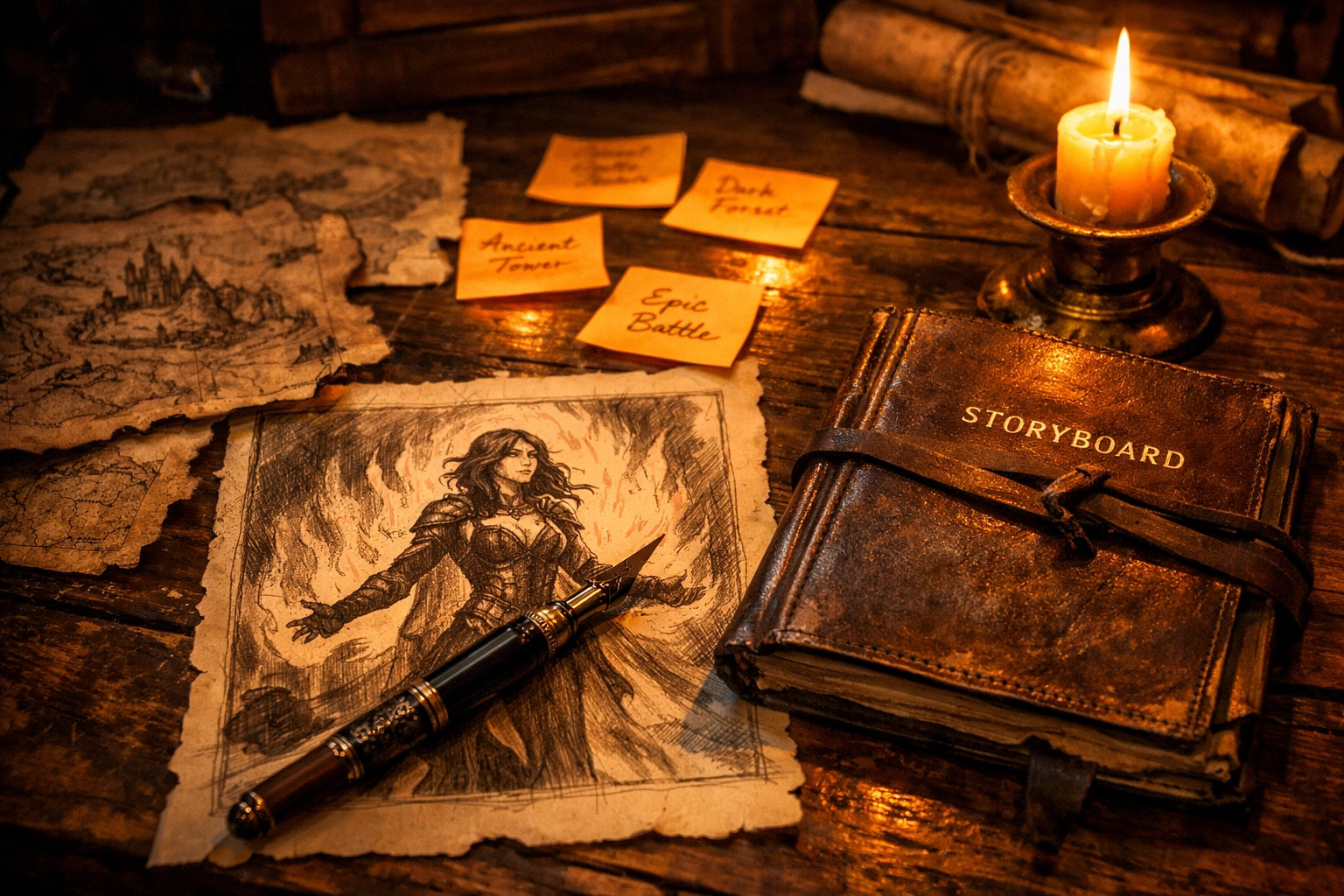
If you’ve been following along with the transition from my "Office Manager" life to my "Creative Architect" life, you know things are getting a little... ethereal around here. Lately, my desk hasn’t just been covered in schedules and spreadsheets; it’s been buried under sticky notes, character archetypes, and maps of worlds that don’t exist yet.
I’m currently in the "world-building and storyboarding" phase of a new project. It’s a space filled with shadows, ancient flames, and the kind of high-stakes tension you only find in Paranormal Romance and Fantasy. But a funny thing happened while I was trying to map out the journey of my protagonist. I realized that the way we build a heroine on paper is exactly how we need to rebuild ourselves in real life.
Specifically, I realized how much of my life I’ve spent storyboarding myself as a side character.
If you’ve ever felt like you’re living a life that was written for someone else, or if you’ve noticed that you’re constantly "editing" your personality to make the people around you comfortable, then we need to talk. We need to talk about healing self-abandonment and how to stop people-pleasing before your own "plot" stalls out for good.
The Blueprint: Storyboarding a Life vs. a Book
In the writing world, a storyboard is where you map out the beats. You decide where the character starts (usually in a place of lack or discomfort) and where they need to end up (reclaiming their power/saving the world/finding the love they actually deserve).
But here’s the secret: for a character to be "main character material," they have to have an internal arc. They can’t just have things happen to them. They have to make choices.
When I looked at my own life through the lens of a storyboard, I saw a lot of "happening." I saw a lot of scenes where I was reacting to other people’s needs, scripts where I was the "reliable one" or the "helper," and very few scenes where I actually stopped to ask: What does the heroine actually want?
In coaching, we call this "writing yourself small." It’s the habit of shrinking your desires, your voice, and your boundaries so that you don't disrupt the flow of someone else's story. It’s the ultimate form of people-pleasing. You become so good at being a supporting character that you eventually forget you were supposed to be the lead.
The Fatal Character Flaw: Self-Abandonment
Every great heroine needs a flaw. In the world of Fantasy and PNR, maybe it’s a lack of control over her magic or a deep-seated distrust of those in power. But in the "real world" of coaching deep feelers and empaths, the most common fatal flaw I see is self-abandonment.
Healing self-abandonment starts with recognizing it for what it is: a survival strategy.
When we storyboard a character, we look at their backstory. Why are they afraid of their own flame? Usually, it’s because at some point, showing that flame got them burned. So, they learn to douse it. They learn that they are "safer" or "more lovable" if they just ignore their own instincts and follow the path laid out for them.
If you are constantly saying "yes" when your soul is screaming "no," you are abandoning the heroine. You are essentially cutting out the most important scenes of your own book because you’re afraid the "readers" (the people in your life) won't like the direction the story is going.
Identifying the "Side Character" Syndrome
Are you writing yourself as a side character? Here are a few "plot holes" to look for in your current life storyboard:
The Dialogue Check: Do you find yourself saying what people want to hear instead of what you actually think?
The Motivation Gap: Are your daily actions driven by your own goals, or by the fear of disappointing someone else?
The Setting Trap: Do you only feel "at home" when you are being useful to others?
If you answered yes to these, you’re stuck in the "Side Character Syndrome." You’re focused on how to stop people-pleasing, but you’re trying to do it by changing your actions without changing your identity.
In my storyboarding process, if a character is too passive, the story dies. The same happens in life. If you aren't the one driving the carriage (or the dragon, or the magic system), you’re just a passenger in your own existence.
The Belonging Audit: A Coaching Tool for Your Narrative
One of the most powerful tools we use at The Ang Perspective is something I like to call the Belonging Audit.
When I’m building a world, I have to make sure every element belongs there. If I put a high-tech laser gun in a medieval fantasy setting without a very good reason, it feels jarring. It doesn't belong.
In your life, the Belonging Audit asks: Do I belong to myself, or do I belong to everyone else’s expectations?
To do a Belonging Audit, look at the "scenes" of your week.
Which scenes made you feel powerful and centered? (You belonged to yourself.)
Which scenes made you feel drained, resentful, or "performed"? (You were abandoning yourself to belong to someone else.)
Healing self-abandonment requires the bravery to admit that you’d rather be "out of place" in someone else’s world than a stranger in your own. It means looking at your life storyboard and having the courage to erase the parts that were written in someone else’s handwriting.
Protecting the Magic (and the IP)
I know you’re probably dying to know more about the characters I’m building: the ones with the secret lineages and the magic that smells like ozone and ancient forests. But here’s the thing: part of "Main Character Energy" is knowing what to keep for yourself.
In both writing and coaching, we have to protect the "vibe." If I give away all the plot twists and the unique lore before the book is even written, the magic dissipates. It’s the same with your personal growth. You don't owe everyone a front-row seat to your transformation.

When you're learning how to stop people-pleasing, one of the hardest parts is setting boundaries around your creative and emotional process. People who are used to you being an "open book" for their benefit will be uncomfortable when you start adding "classified" chapters.
That’s okay. Let them be uncomfortable. Your story isn't a democracy; it’s a kingdom. And you’re the one wearing the crown.
Writing Your New Chapter
Storyboarding is messy. It involves a lot of moving things around, realizing you made a mistake, and sometimes starting over from page one.
If you feel like you’ve spent the last decade self-abandoning, don't panic. That’s just the "Beginning" beat of your arc. The middle: the part where you learn to fight back, set boundaries, and reclaim your magic: is where the real story begins.
At The Ang Perspective, we aren't here for "quick fixes" or "counseling" that just helps you cope with being a side character. We are here for the deep-level coaching that turns you back into the heroine.
Are you ready to stop editing yourself for people who aren't even reading the same book?
It’s time to pick up the pen. The world is waiting for your story: the real one. The one where you don't abandon yourself in the final act.
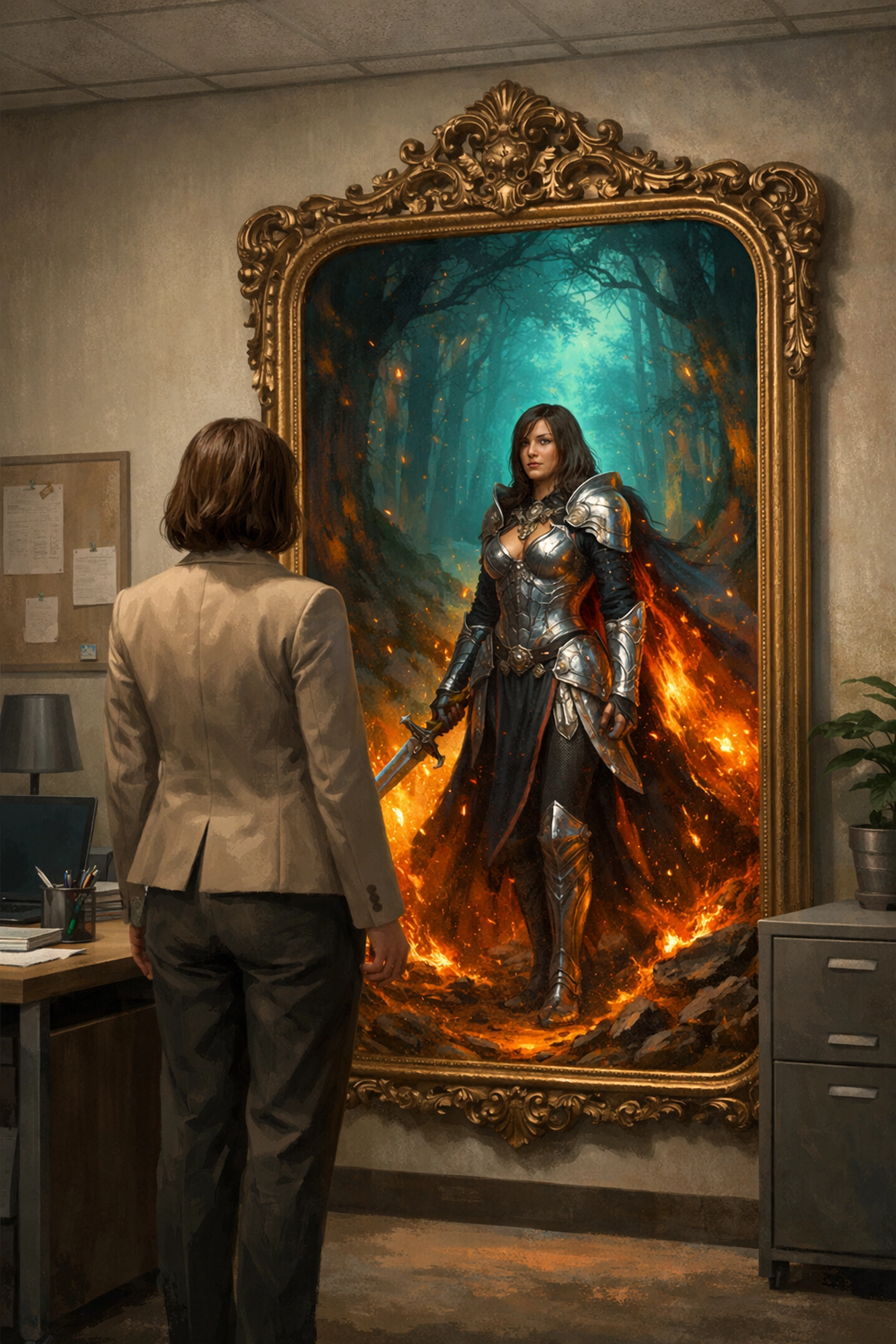
Stay tuned for more updates on the "World Building" process, but in the meantime, go do your own Belonging Audit. I think you'll be surprised at what you find when you start looking for the heroine in the mirror.
Want to dive deeper into storyboarding your life? Let’s talk coaching. We can look at your internal storyboard together and find where you’ve been writing yourself out of your own magic.
Comments