Reflection 4: The Weight of Time
- theangperspective
- Mar 26
- 5 min read
I have spent a significant portion of my life at war with the clock. Not a dramatic war—no sirens, no headlines—just the quiet kind that lives in the body. The kind that keeps your shoulders slightly lifted even when you’re “resting.” The kind that makes you check the corner of a screen like it’s going to scold you.
For years, time felt like something I had to manage like a crisis. Like if I loosened my grip for even a second, everything would slide off the table.
That’s what being an Office Manager trained into me. Hyper-vigilance dressed up as responsibility. A whole career of being the one who noticed first—who caught the missed detail, the forgotten form, the appointment that wasn’t written down, the email that needed a response before it became a problem. I learned to live inside the next fifteen minutes. I learned to hold other people’s time like it was glass.
And it didn’t stay at work.
I brought it home. I brought it into my mornings. Into the way I listened with half an ear because the other half was counting what still had to get done. Into the way my body moved through the day like it was always late, even when I wasn’t.
Time wasn’t a river. It was a stopwatch.
Now, standing on the threshold of 50, it’s changing. It isn’t getting lighter. It’s getting heavier—like I can feel it in my bones, in the soft ache behind my ribs when the house finally goes quiet. The weight of time isn’t the fear of getting older, exactly. It’s the realization that the “someday” I kept promising myself is not waiting politely in the corner anymore.
It’s here. It’s tapping the table.

I used to be obsessed with the “right time.” Like life was a set of invisible checkboxes and if I hit them in the correct order, peace would unlock like a prize. I worried about being behind—behind who, I couldn’t even say. But the feeling was real. Heavy. A constant low-grade panic that I had missed the window for the things that mattered most.
Looking back, it makes me tired to even think about how much energy I wasted trying to calibrate my life to a clock that didn’t exist. Waiting for a green light that never came because nobody was in charge of handing them out.
The “right time” is a ghost. It keeps moving. And when you’re trained to be the one who keeps the trains running on time, you can spend your whole life chasing it—thinking your worth is measured by how smoothly you keep things from falling apart.
There’s a particular kind of stress that comes from believing there aren’t enough hours in the day. It tightens you. It narrows your vision. It turns your attention into a flashlight beam instead of a wide, warm lantern. You start living like you’re trying to outrun something you can’t even name.
I know that feeling intimately: waking up already behind, already negotiating with the clock. By noon, the list has grown and the hours have shrunk. And I’d feel like I was failing—like the problem was me, like I should be able to fit a gallon of life into a pint-sized day if I could just try harder, plan better, be more disciplined.
But the truth is, the work is never done. The laundry never stays folded. The emails keep coming. The to-do list is a living thing that breeds in the dark.
And when you live like that long enough, you start sacrificing the parts of you that don’t “produce.” Writing. Dreaming. Wandering. Just being. Those become the first things to go because they don’t scream for attention the way obligations do.
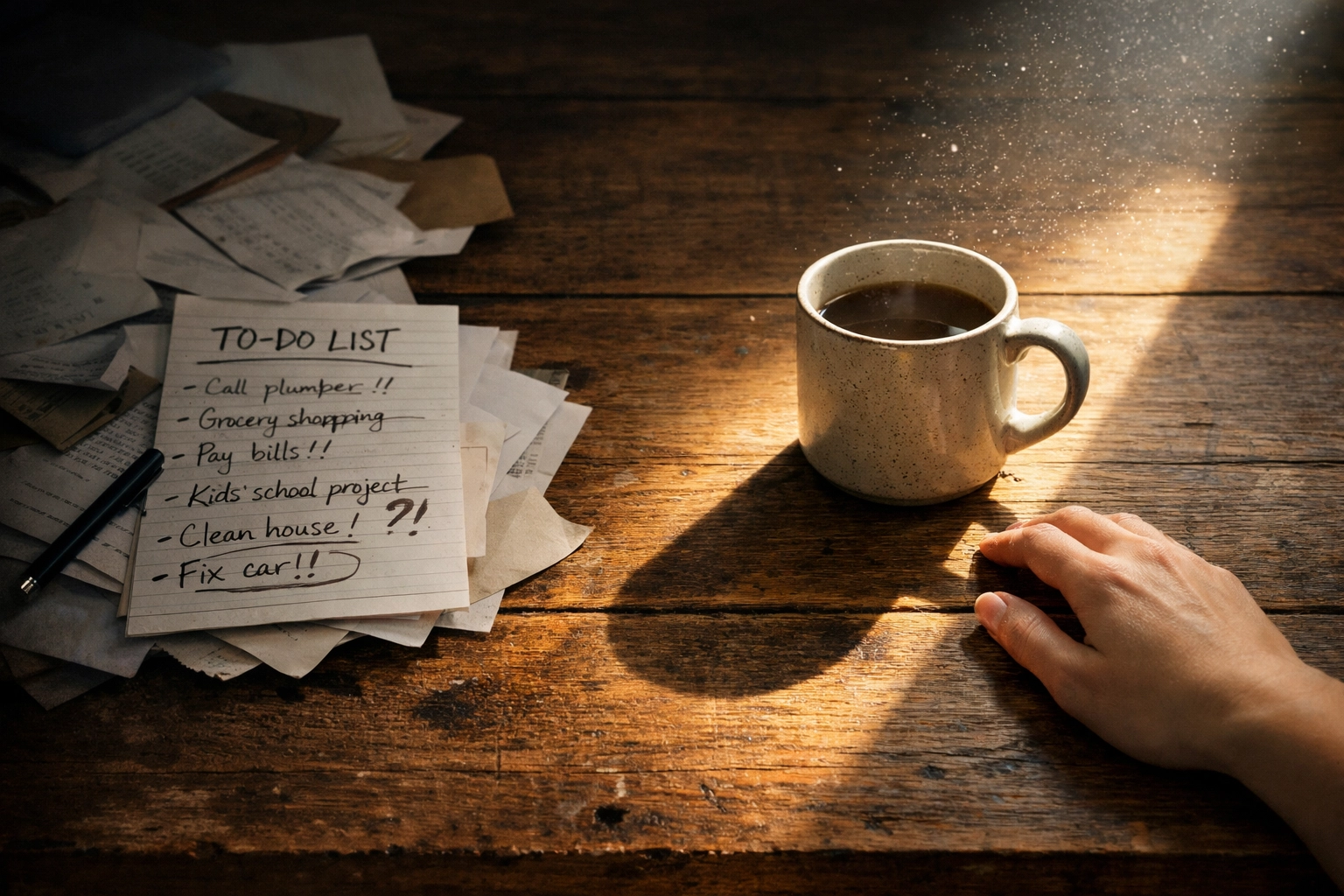
That’s where the grief lives for me. Not in the big dramatic regrets, but in the quiet trade-offs. All the times I told myself, Once I get through this season… once the house is caught up… once the kids need me less… once I handle this one last thing…
But the seasons keep coming. There’s always one last thing.
Turning 50 is making me look at the receipts.
Not in a cruel way. More like an honest way. Like—Oh. That’s what I did with my hours. That’s what I gave my attention to. That’s what I pushed to the edges because I was busy being the one who held it all together.
And here’s the shift I can feel happening now: time doesn’t feel like a race anymore. It feels like a story.
A story unfolds whether you sprint or not.
For so long, I lived like I could “win” time if I was efficient enough. Like I could hustle my way into spaciousness. Like if I just got everything under control, I’d finally be allowed to exhale.
But this new season—this leaning into being a storyteller—doesn’t respond to hurry. Stories don’t open when you bark orders at them. They open when you sit down long enough to hear what’s true.
The other day I caught myself doing it—moving too fast through something that mattered. Rushing a moment that didn’t need to be rushed. My body had already decided we were late, even though nothing was actually on fire.
That’s the unbecoming I’m in.
Unbecoming the hurried woman.
Unbecoming the woman who measures her goodness by how much she can carry.
Unbecoming the woman who stays slightly braced, slightly ahead, slightly removed from her own life because she’s always tracking what’s next.
I’m noticing how time feels different when I let it be thick. When I let it have texture. When I let a morning be a morning instead of a launch pad. When I let my coffee be hot instead of something I reheat three times because I kept forgetting I poured it.

The clock is louder now, yes—but not like a threat. More like a heartbeat. More like a reminder that my life is actually happening while I’m managing it.
I look at my hands and I can see it. I look at my children and I can feel how fast the seasons turned. And something in me is getting less tolerant of the things that drain me—not out of bitterness, but out of clarity. Time is a non-renewable resource, and I used to spend it like I had an unlimited supply.
The weight of time, for me, isn’t about panic. It’s about importance. It’s the gravity of the present moment. The invitation to stop skimming across the surface of my days.
I’m learning to honor time instead of wrestle it. To stop trying to cram more into my life and start putting more of myself into the life I already have. I’m accepting that I will never be “done.” There will always be loose ends. Always something unfinished. And maybe that’s not a failure—maybe that’s just being human.
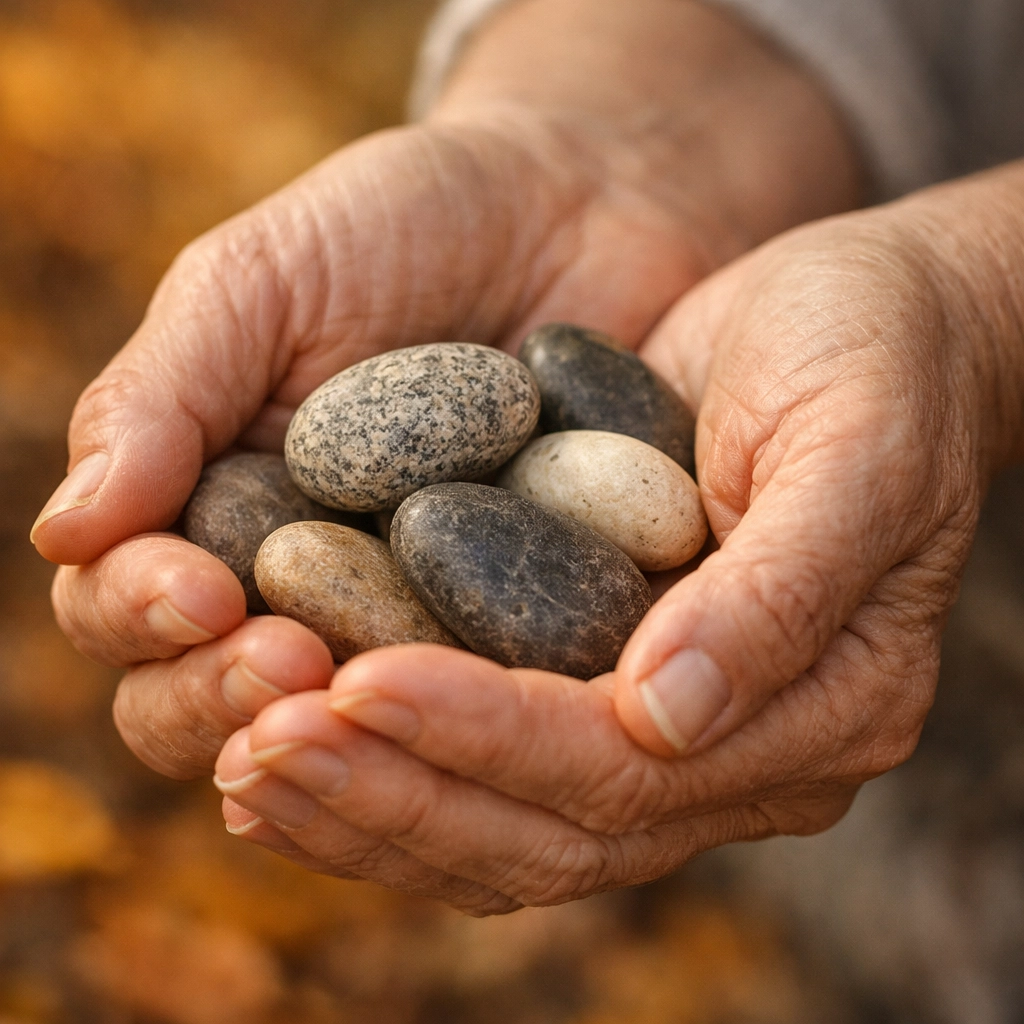
Time is heavy because it is full. It’s full of memory and mistake and joy and the people I’ve loved. Carrying 50 years is a privilege, even when it makes my throat tight sometimes.
I don’t have clean answers yet. I’m still learning how to live without sprinting. Still catching myself in old patterns—still reaching for the stopwatch when what I actually want is a pen.
But I can feel the war ending.
I’m putting down the weapons. I’m letting time be what it is: not a race to win, but an unfolding story I’m finally willing to stay present for—page by page, breath by breath, right here in the middle of it.

Comments